
Responsible AI in Essential Industries: Designing, Developing, and Deploying Trustworthy Systems under the NIST AI RMF
Deploying artificial intelligence in essential, physical, and highly regulated industries requires more than algorithmic capability. It demands demonstrable safety, strict operational boundaries, and auditable accountability. This protocol details how the NIST AI Risk Management Framework (NIST AI RMF 1.0) is embedded directly into everyday workforce execution.
direct answer
Deploying artificial intelligence in essential, physical, and highly regulated industries requires more than algorithmic capability. It demands demonstrable safety, strict operational boundaries, and auditable accountability. This protocol details how the NIST AI Risk Management Framework (NIST AI RMF 1.0) is embedded directly into everyday workforce execution.
1. The Four Foundational Pillars of NIST AI RMF
The National Institute of Standards and Technology (NIST) established the AI Risk Management Framework to provide organizations with practical guidance for addressing risks throughout the artificial intelligence lifecycle.
Rather than treating risk as an afterthought, the framework embeds governance into the operational architecture across four core functions: Govern, Map, Measure, and Manage.
In essential industries — where automated outputs directly influence job safety, public infrastructure, certified payroll, and patient scheduling — this structured approach ensures systems operate reliably without compounding risk.
- -Govern: Cultivating an institutional culture of risk management, defining transparent operational boundaries, and establishing human accountability.
- -Map: Contextualizing tasks within the physical workflow to understand potential failure modes, data dependencies, and organizational impacts.
- -Measure: Applying quantitative benchmarks to evaluate model accuracy, hallucination frequency, latency, and bias.
- -Manage: Deploying active monitoring, human-in-the-loop validation checkpoints, and rapid fallback mechanisms.
2. Design, Develop, Deploy, and Use Responsibly
Responsible AI is not a static compliance checkbox; it is a continuous operating lifecycle. Every workforce task executed by Jo follows a rigorous four-phase deployment lifecycle:
Design: Tasks are decomposed using the 85/15 Law. Only rule-based, procedural workflows are assigned to machine execution, while subjective clinical and commercial judgment remains exclusively with humans.
Develop: Machine workflows are calibrated against industry-specific ontologies, approved price books, and statutory wage tables.
Deploy: Workflows are launched in sandboxed environments with strict verification gates before entering production.
Use: Runtime telemetry continuously monitors outputs, logging auditable decision trails for regulatory and insurance review.
3. The Human Gatekeeper Guarantee
The greatest danger in enterprise AI deployment is autonomous drift — models making unsupervised decisions that affect customers, finances, or compliance.
Under the NIST framework, human gatekeepers are not passive observers. They are the final decision-makers who verify, sign off, and legally own every critical output before it leaves the organization.
This Human + Machine synthesis eliminates catastrophic algorithmic failure while unlocking the throughput speed of modern computation.
repost & newsletter
Share this framework or read on Substack
Republish these takeaways to your network or subscribe to get our weekly operating playbooks.
faq
Common questions
What is the NIST AI Risk Management Framework?
The NIST AI RMF 1.0 is a voluntary federal guidance framework developed by the National Institute of Standards and Technology to help organizations manage the risks of artificial intelligence technologies and foster trustworthy AI.
How does Jo embed the NIST framework into daily staffing?
Jo applies the four NIST functions (Govern, Map, Measure, Manage) to every automated workflow, enforcing strict human gatekeeper checkpoints on all client-facing and compliance-critical outputs.
Why is NIST alignment essential for commercial insurance?
P&C underwriters and commercial carriers increasingly demand evidence of structured AI risk governance. Documented adherence to NIST standards satisfies underwriter scrutiny and preserves insurability under standard commercial policies.

healthcare
Healthcare labor bottlenecks are intensified by an aging population, persistent nursing and support-role shortages, and long training pipelines for clinical and technical roles. The constraint is not just volume. It is the wrong mix of skilled capacity at the exact moment patient demand keeps rising.

energy
Energy labor bottlenecks sit between retirements in traditional trades and fast-growing demand from renewables, grid expansion, data-center power, and electrification. Utilities and field operations need more skilled workers while experienced staff leave the workforce.
manufacturing
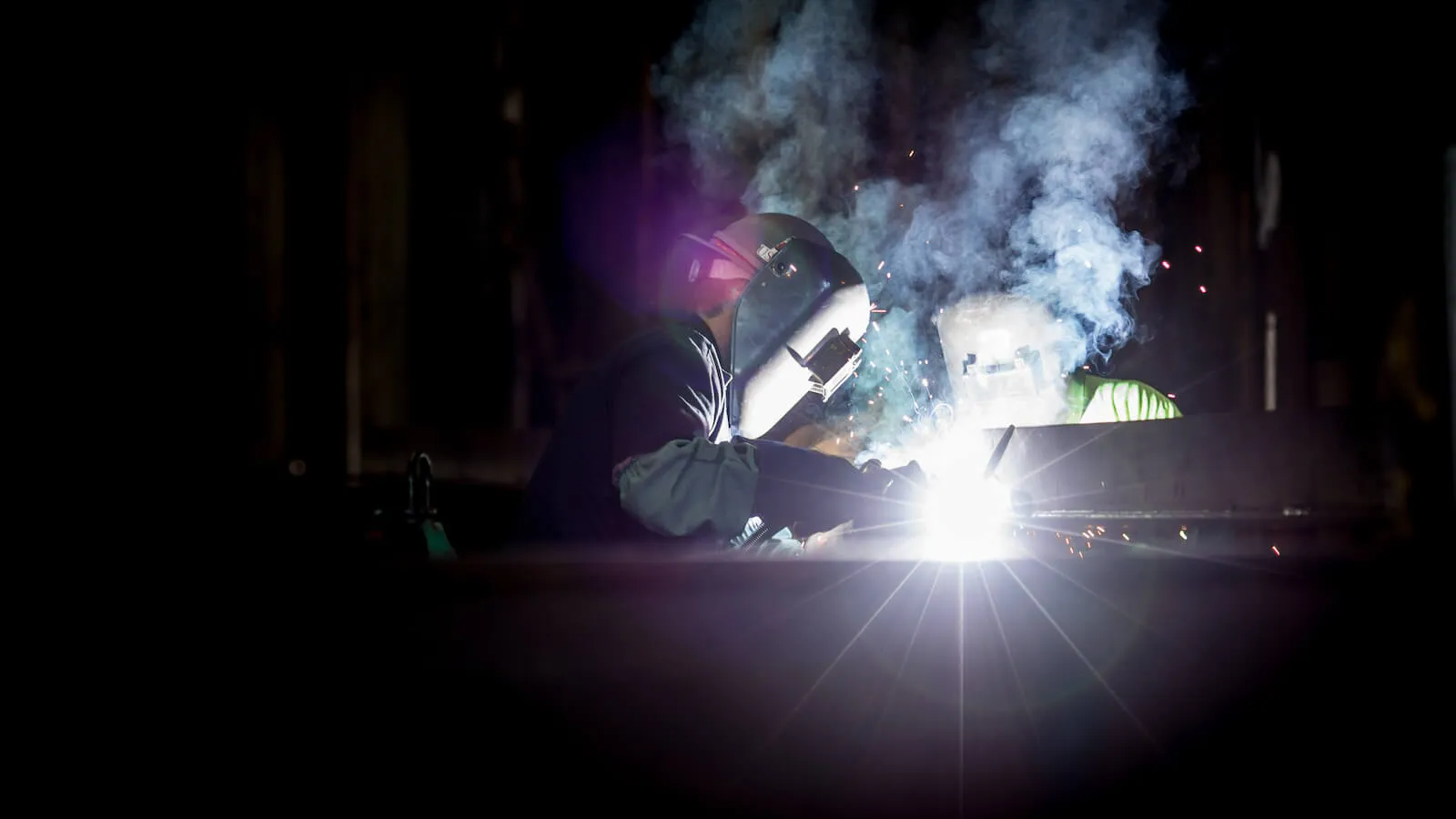
Manufacturing labor bottlenecks come from retirements, reshoring demand, smart manufacturing technology, and a widening skills gap. The issue is not only not enough people. It is training, attraction, and workforce design lagging behind what modern production now requires.
next step
Map the bottleneck inside your operation.
Start with the LaborMap™ diagnostic.
Start LaborMap™ Audit