
The Non-Deterministic Labor & Robotics Regulatory Matrix: Healthcare, Energy, and All 9 Manufacturing Sub-Sectors
Jeremy Knowles · Founder & Licensed P&C Producer · Updated 2026-11-09
In regulated physical industries — Healthcare, Energy, and Manufacturing — deploying non-deterministic AI agents alongside physical robotics (cobots, AMRs, surgical systems, and grid automation) triggers strict statutory boundaries. Across every federal, state, and international standard, three universal laws hold true: non-deterministic AI is legally barred from safety-critical execution, human-in-the-loop oversight is a statutory license requirement, and workload pacing must prevent operator rubber-stamping.
direct answer
In regulated physical industries — Healthcare, Energy, and Manufacturing — deploying non-deterministic AI agents alongside physical robotics (cobots, AMRs, surgical systems, and grid automation) triggers strict statutory boundaries. Across every federal, state, and international standard, three universal laws hold true: non-deterministic AI is legally barred from safety-critical execution, human-in-the-loop oversight is a statutory license requirement, and workload pacing must prevent operator rubber-stamping.
1. The 3 Universal Regulatory Laws of Physical & Clinical Operations
Whether an enterprise is running a hospital utilization management desk, a NERC CIP bulk power control room, or a cGMP pharmaceutical batch line, regulators enforce three non-negotiable rules on probabilistic software and adaptive machinery:
Law 1 — Non-Deterministic AI Is Banned from Safety-Critical Execution: Under EU GMP Annex 22 (pharma), IEC 61511 SIL 1–4 (chemicals), SAE ARP6983 (aerospace), ISO/PAS 8800 (automotive), and EU Machinery Regulation (EU) 2023/1230 (mandatory Jan 20, 2027), probabilistic or self-evolving AI cannot directly actuate safety-instrumented functions, release batches, or expand physical movement envelopes without a deterministic safety bounding box.
Law 2 — Licensed Human Sign-Off Is a Statutory Mandate: Under CMS 42 CFR 422.101, California SB 1120 (Physicians Make Decisions Act), State Nurse Practice Acts, NERC PER-005, NRC 10 CFR Part 50, and PHMSA 49 CFR 192.631, an algorithm cannot legally deny patient care, issue a grid switching tag, or override a pipeline alarm.
Law 3 — Cognitive Pacing Prevents Rubber-Stamping: Regulators explicitly audit whether human reviewers have sufficient time and context to exercise independent judgment. LaborMap™ enforces a 70%–80% Safe Feasibility ceiling so licensed clinicians, dispatchers, and quality engineers never suffer alarm fatigue.
2. Healthcare & Clinical Operations (CMS, FDA, ASTP/ONC, Joint Commission, State Boards)
In healthcare, non-deterministic labor spans clinical documentation, revenue cycle / prior authorization, nursing triage, pharmacy verification, and robotic-assisted surgery. LaborMap™ restricts machine teammates to the 80% chart prep, coding assembly, and scheduling optimization while routing 100% of clinical and coverage determinations to licensed clinicians.
- -CMS (42 CFR 422.101(c) & Interoperability Rules): Prohibits Medicare Advantage plans from using algorithms or AI alone to deny or discontinue care; requires individual clinical review by a licensed clinician.
- -California SB 1120 (Physicians Make Decisions Act) & AB 3030: Requires a licensed physician or healthcare provider to supervise and make final medical necessity determinations; mandates clear generative AI disclosures in clinical communications.
- -ASTP / ONC HTI-1 Final Rule (45 CFR 170.315(b)(11)): Mandates Decision Support Interventions (DSI) source-attribute transparency and FAVES (Fair, Appropriate, Valid, Effective, Safe) risk management.
- -FDA SaMD, PCCP & Surgical Robotics (IEC 80601-2-77): Adaptive models require an FDA Predetermined Change Control Plan (PCCP); surgical robots (RASD) operate under strict master-slave human control boundaries.
- -State Boards of Nursing (BON) & Pharmacy (USP <797>/<800>): Non-delegable nursing assessments and final RPh verification gates remain 100% human-signed.
3. Energy, Utilities & Grid Infrastructure (NERC CIP, FERC, DOE, NRC, PHMSA, FAA, EPA)
In energy and utilities, non-deterministic labor powers load forecasting, outage restoration prep, vegetation inspection, and preventative maintenance — while deterministic physics and certified human operators govern switching and safety tags.
- -NERC CIP (CIP-002 through CIP-015, CIP-013 Supply Chain, CIP-015 INSM) & PER-005: AI agents cannot hold unmonitored write access to Bulk Electric System (BES) Cyber Assets; switching orders require NERC-certified human system operators.
- -DOE AI Energy Risk Framework (AI-ERF) & FERC Order 2222 / 881: Governs adversarial resilience, autonomous grid-edge DER dispatch bounds, and transmission line rating validation.
- -NRC NUREG-2261 & 10 CFR 50.59 (Nuclear): Non-deterministic AI is barred from Class 1E nuclear safety-related actuation; Reactor Operators retain 100% control room authority.
- -PHMSA 49 CFR 192.631 / 195.446 (Pipeline Control Room Management): Prohibits alarm flooding and requires human controller validation for pipeline shut-in and valve actuation.
- -FAA 14 CFR Part 107 / Part 108 (BVLOS Drones) & OSHA 1910.269 / NFPA 70E: Automated drone/crawler inspection feeds work-order drafts, while Lockout/Tagout (LOTO) and Hot Line Tags remain 100% human-verified.
4. All 9 Manufacturing Sub-Sectors & Industrial Robotics Crosswalk
Across horizontal industrial robotics standards — OSHA 29 CFR 1910 Subpart O, ANSI/RIA R15.06 & ISO 10218-1/-2:2025 (industrial robots & cobots), ANSI/A3 R15.08 (AMRs), UL 4600 (autonomous systems safety cases), and the EU Machinery Regulation (EU) 2023/1230 (High-Risk Annex I conformity for self-evolving ML behavior, mandatory Jan 20, 2027) — non-deterministic software must be isolated from physical safety-rated controllers via read-only OPC-UA (IEC 62541) boundaries:
- -1. Pharmaceuticals & Biotech (FDA 21 CFR Part 11/211, EU GMP Annex 11 & Annex 22): EU GMP Annex 22 explicitly prohibits dynamic/non-deterministic GenAI in critical GMP applications; Qualified Person (QP) / QA retains 100% batch release sign-off.
- -2. Medical Device Manufacturing (FDA QMSR / 21 CFR Part 820 & ISO 13485:2016): Automated vision inspection and DHR assembly require formal computer software validation (ISO/TR 80002-2) and human CAPA disposition.
- -3. Automotive & EV Mobility (IATF 16949, ISO 26262 ASIL A–D, ISO 21448 SOTIF, ISO/PAS 8800): ISO/PAS 8800 governs AI safety in road vehicles; assembly cobots and battery test rigs enforce deterministic torque and thermal cutoffs.
- -4. Aerospace & Defense (FAA 14 CFR Part 21, AS9100D, SAE ARP6983, CMMC 2.0 / NIST 800-171, ITAR): SAE ARP6983 governs airborne ML; FAA-certificated A&P mechanics / Authorized Inspectors execute 100% of airworthiness releases.
- -5. Food, Beverage & Agriculture (FDA FSMA 21 CFR 117, USDA-FSIS, ISO 18497 Ag Robotics): Preventive Controls Qualified Individuals (PCQI) sign off on all CCP deviations; autonomous field tractors comply with ISO 18497 obstacle detection.
- -6. Chemicals, Petrochemicals & Refining (OSHA PSM 1910.119, EPA RMP, IEC 61511 SIL 1–4): Non-deterministic AI is strictly excluded from Safety Instrumented Functions (SIF / SIS); Management of Change (MOC) requires human engineering sign-off.
- -7. Semiconductors & Electronics (SEMI S2 / S8 / S14, IPC-A-610, NIST CHIPS Guardrails): Overhead Hoist Transport (OHT) and AMHS fab robotics enforce deterministic E-stop and FOUP interlocks under SEMI S2.
- -8. Heavy Machinery, Metals, Mining & Welding (MSHA 30 CFR, ISO 17757 Autonomous Mining, AWS D16.1 Robotic Welding): Certified Welding Inspectors (CWI) verify weld integrity; autonomous haulage systems enforce ISO 17757 geofenced safety zones.
- -9. Consumer Packaged Goods (CPG), Packaging & Warehousing (ANSI B155.1, ANSI/ITSDF B56.5 AGVs, CPSC): High-speed palletizers and warehouse AMRs enforce deterministic LiDAR safety zones (IEC 61496) and human Lot Release.
repost & newsletter
Share this framework or read on Substack
Republish these takeaways to your network or subscribe to get our weekly operating playbooks.
faq
Common questions
Why does EU GMP Annex 22 ban generative AI in critical pharmaceutical manufacturing steps?
EU GMP Annex 22 (Artificial Intelligence) requires that any AI model used in critical Good Manufacturing Practice (GMP) processes have deterministic, static, and reproducibly validated outputs. Because dynamic or probabilistic generative models produce non-deterministic outputs, they must be restricted to non-critical preparatory drafting with a human Qualified Person (QP) or QA officer executing final batch disposition.
What does EU Machinery Regulation (EU) 2023/1230 require for AI and robotics?
Taking mandatory effect on January 20, 2027 (replacing Directive 2006/42/EC), the EU Machinery Regulation classifies machinery with self-evolving safety behavior driven by machine learning as High-Risk (Annex I), mandating third-party Notified Body conformity assessment and strict deterministic safety bounding boxes that AI cannot override.
How does LaborMap™ integrate with industrial SCADA, PLC, and OPC-UA systems?
LaborMap™ connects via read-only telemetry (such as OPC-UA IEC 62541 read-only nodes) to ingest sensor logs, draft work orders, and assemble compliance packets (the 80% preparation), while physically and logically isolating non-deterministic agents from safety-rated PLC/SIS write actuation and routing the 20% execution decision to a licensed human operator.

healthcare
Healthcare labor bottlenecks are intensified by an aging population, persistent nursing and support-role shortages, and long training pipelines for clinical and technical roles. The constraint is not just volume. It is the wrong mix of skilled capacity at the exact moment patient demand keeps rising.

energy
Energy labor bottlenecks sit between retirements in traditional trades and fast-growing demand from renewables, grid expansion, data-center power, and electrification. Utilities and field operations need more skilled workers while experienced staff leave the workforce.
manufacturing
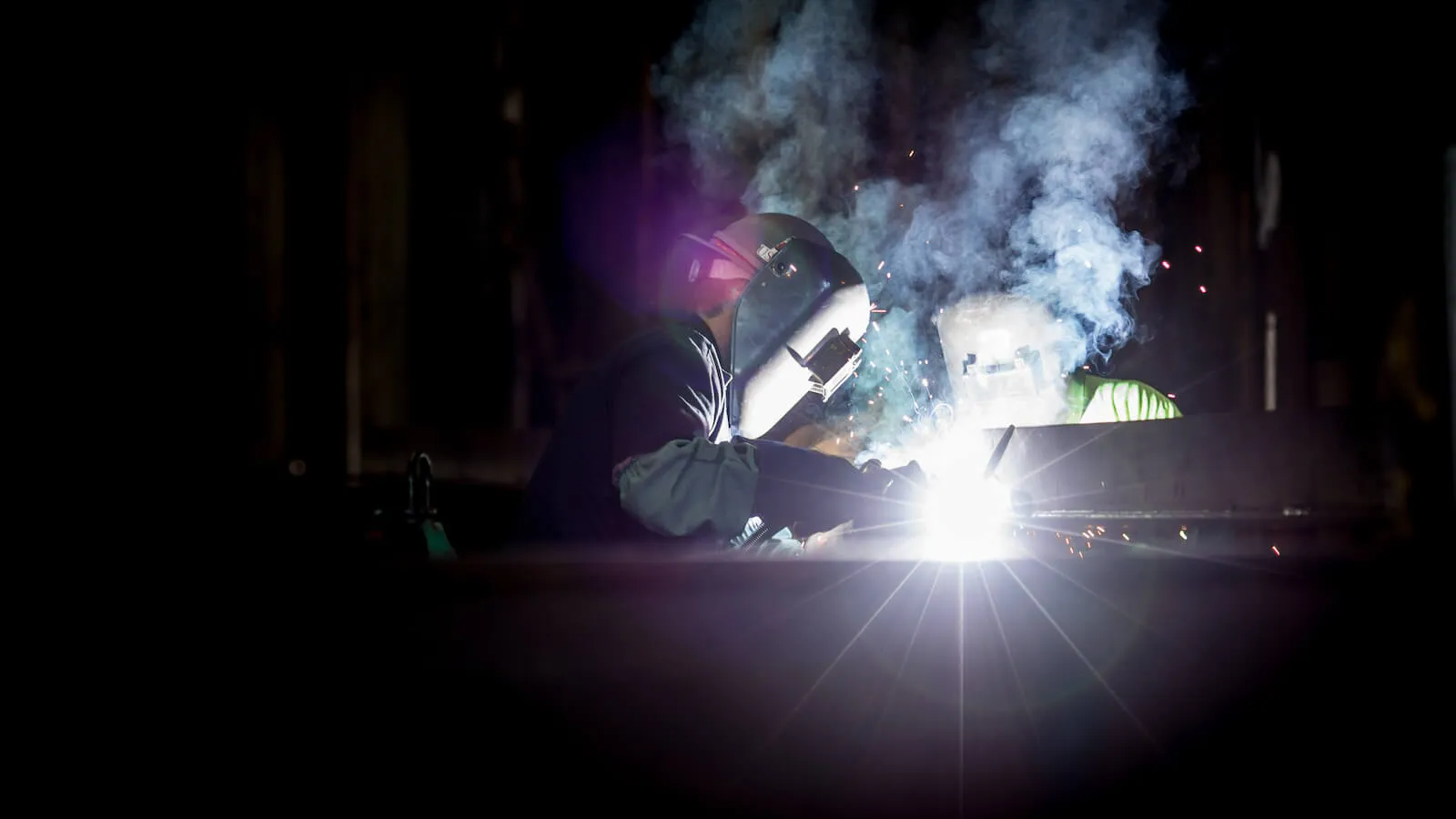
Manufacturing labor bottlenecks come from retirements, reshoring demand, smart manufacturing technology, and a widening skills gap. The issue is not only not enough people. It is training, attraction, and workforce design lagging behind what modern production now requires.
next step
Map the bottleneck inside your operation.
Start with the LaborMap™ diagnostic.
Start LaborMap™ Audit